
When an underground drain line starts to fail, homeowners have to choose between sewer pipe lining vs replacement. A clogged or leaking sewer line can back up your plumbing fixtures, contaminate your yard, and damage your foundation. If you’re dealing with repeat blockages or cracked underground pipes, it helps to understand how each repair method works before you commit to a plan.
Cured-in-place pipe lining can repair certain types of damage without digging, but full pipe replacement is still the standard fix for serious structural failures. This guide compares how cured-in-place liners and trenchless replacement work, where each one fits, and how a camera inspection helps you choose the right path.
How Sewer Pipe Lining Works
Cured-in-place pipe lining, often called sewer lining, creates a new pipe wall inside the old, worn-out line. Before lining, the pipe has to be cleaned out with a drain snake or high-pressure water jetting to remove roots, debris, and grease. Once the inside is clean, a felt sleeve soaked in epoxy is pulled or blown into the damaged section with air or water pressure.
When the liner is in place, steam, hot water, or open air cures the resin until it hardens into a smooth sleeve against the old pipe walls. This sewer lining repair method can seal hairline cracks, stop small roots from getting in through porous joints, and close pinhole leaks without disturbing your yard.
Where Lining Falls Short
Lining can fix certain surface problems, but it can’t restore a pipe that has already lost its shape. Because the liner forms to the old pipe, any structural defect in the original line carries over to the new sleeve.
- Collapsed or Crushed Sections: When a section of sewer pipe collapses, a felt liner can’t get past the blockage or hold up the weight of the soil around it.
- Sewer Line Bellies: A belly forms when the soil under a pipe shifts and the pipe sags. Grease, solids, and standing water settle in the low spot. Lining coats the dip but doesn’t fix the slope, so the blockages keep coming back.
- Severe Joint Offsets: When ground movement pushes pipe sections out of line, the edge where they meet forms a ledge that catches toilet paper and waste. A liner installed over an offset joint keeps that ledge in place.
- Reduced Interior Diameter: An epoxy sleeve bonds to the inside of the old pipe, which slightly narrows the opening. In lines with a shallow slope, that smaller opening can slow drainage and make clogs more likely.
How Sewer Line Replacement Works
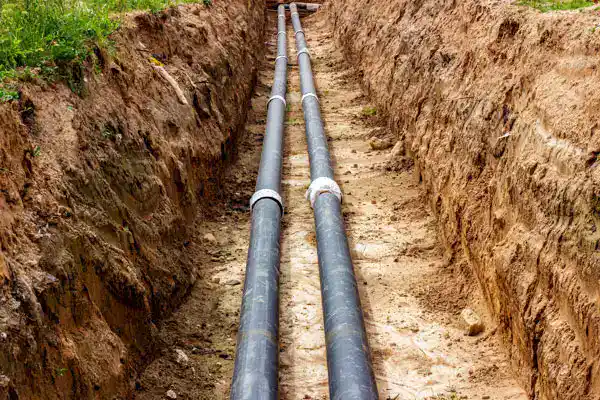
When a sewer pipe has failed, our Littleton plumbers replace sewer line sections using either traditional digging or trenchless methods. Traditional replacement means digging a trench along the full length of the line, removing the damaged pipe, and installing new pipe. Open-cut replacement is sometimes necessary when other utilities are in the way, but it often means digging up lawns, driveways, garden beds, and walkways.
Trenchless sewer line replacement avoids a long trench by installing new pipe through small entry and exit holes. Our team uses specialized equipment to run new, heavy-duty pipe along the path of the old line, so your yard and hardscaping stay in place while you get a completely new sewer line.
Pipe Bursting vs. Pipe Lining
Homeowners looking at no-dig options often compare pipe bursting with cured-in-place pipe lining. Pipe lining puts a resin sleeve inside the old pipe. Pipe bursting replaces the old pipe entirely. During trenchless pipe bursting, a steel bursting head moves through the old pipe, breaks it apart, and pushes the pieces out into the surrounding soil.
At the same time, the bursting head pulls a continuous length of high-density polyethylene pipe into the space behind it. You get the full opening of a brand-new pipe without relying on the strength of a damaged one. For lines with extensive deterioration, heavy root damage, or partial collapse, trenchless replacement is a dependable, long-term fix that lining can’t match.
Why Replacement Is Often the Better Long-Term Fix in Older Homes
Many older New England homes have sewer lines made of clay tile, cast iron, or Orangeburg pipe. Each of these materials tends to fail in ways a liner can’t fix for the long term:
- Clay Tile: Clay pipe has many short joints, which give tree roots plenty of places to get in over the years. Frost and settling soil cause clay joints to crack, shift, or break apart beyond what a liner can hold together.
- Cast Iron: Over decades, wastewater corrodes cast iron pipe and causes heavy rust buildup inside, called tuberculation. In advanced cases, the bottom of the pipe rusts away completely, leaving nothing solid for a liner to bond to.
- Orangeburg Pipes: Orangeburg pipe is made from wood pulp and coal tar pitch and was common in homes built in the mid-1900s. It absorbs water, softens, and flattens into an oval under the weight of the soil, which makes full sewer replacement the only real fix.
When a sewer line has reached the end of its service life, deciding between sewer pipe lining vs replacement often means choosing between a patch over a failing pipe and a lasting fix. A liner installed inside a weak or misshapen pipe can fail early, while a full replacement gives you new pipe built to last for decades.
Trenchless Sewer Repair Pros and Cons
Homeowners who don’t want their yard dug up often choose trenchless replacement over a traditional trench. Knowing the advantages and limits of trenchless work helps set expectations before the project starts:
Pros
- Pro: Minimal Yard Disruption: Crews dig small access pits instead of tearing open the whole lawn, which protects established trees, paved driveways, and patios.
- Pro: Fewer Joints: Trenchless replacement installs a continuous run of polyethylene pipe with far fewer joints, which makes it much harder for tree roots to get in.
- Pro: Shorter Project Timelines: Trenchless replacement usually takes less time than a deep open-cut trench.
Cons
- Con: Soil Conditions: Rocky ground or ledge can make it harder to pull new pipe and sometimes means some digging in one spot.
- Con: Nearby Utility Lines: If the old sewer line runs close to other underground utilities, the crew has to dig down and expose those crossings to confirm there’s enough clearance before pulling new pipe.
Let the Camera Inspection Make the Call
Guessing the condition of a buried sewer line leads to the wrong diagnosis, unneeded work, and project delays. The only reliable way to see underground damage is a sewer camera inspection. A high-resolution, lighted camera on a flexible cable travels through the cleanout and shows clear video of the pipe joints, inner walls, root intrusion, and changes in slope.
Our plumbers use this live footage to see if your line is solid enough for a spot repair or needs full replacement. At Nashoba Air & BoilerWorks, we focus on replacement because new, continuous pipe stops chronic clogs and fixes collapsed sections and slope problems for good. A camera inspection means our recommendation is based on what we can actually see, not on assumptions.
Choosing the Best Solution for Your Property
Deciding between sewer pipe lining or replacement comes down to the condition and slope of your underground line. Lining can fix minor cracks in a pipe that’s still solid, but it can’t correct bellies, collapsed sections, or badly misshapen pipe. Trenchless replacement gives you minimal digging and the durability of a brand-new sewer line.
A professional camera inspection gives you the facts you need to protect your home. A full sewer replacement protects your property from repeated plumbing maintenance and repair emergencies and keeps your drains working reliably for decades.
Schedule Your Sewer Diagnostic Today
If you notice slow drains, gurgling toilets, or frequent backups, don’t wait for your sewer line to fail. The licensed plumbers at Nashoba Air & BoilerWorks have served homeowners in Littleton, MA, and nearby towns since 2002. We walk you through the camera footage and give you upfront pricing, so you know your options before any work begins.
Protect your yard and get reliable drainage back with trenchless sewer line replacement. Contact Nashoba Air & BoilerWorks today to schedule your sewer line evaluation.