
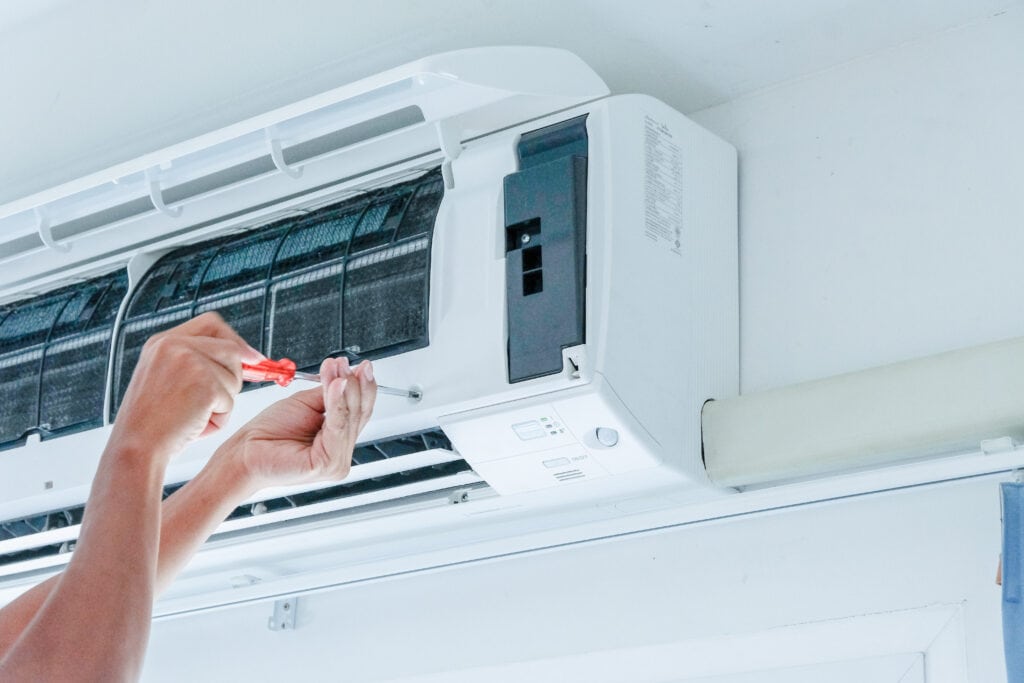
You turn up the thermostat as the first autumn chill settles in, and the indoor unit answers with lukewarm air or nothing at all. Plenty of homeowners across the Nashoba Valley and Southern New Hampshire installed ductless heads primarily for summer cooling and are now asking them to handle whole-room heating for the first time.
A ductless system behaves differently from a conventional furnace or boiler, and cold-weather complaints often trace back to operational oversights rather than mechanical failure. Work through this walkthrough standing in front of the unit before you call.
Filters, Controls, and Clearance
Start with the simplest variables. Most service calls for an underperforming ductless system come down to airflow restriction or a remote control setting.
1. Check and Clean the Return Air Filters
Restricted airflow is the single most common reason a ductless system underperforms in heating mode. Unlike central systems with one thick filter in a utility closet, ductless indoor heads pull air through compact mesh screens right behind the front intake grille. Those small screens load up with household dust quickly, and once they do, the indoor coil cannot transfer heat into the room.
Regular filter cleaning restores circulation:
- Lift the front panel of the indoor head until it clicks into its open position.
- Slide the mesh filter screens down and out of their retaining tracks.
- Vacuum away loose dust, or wash the screens gently in a sink with lukewarm water.
- Let the screens dry completely, away from direct heat, before sliding them back in.
How often depends on pet hair, indoor activity, and run hours. A regular routine matters more than a fixed interval.
2. Verify Remote Control and Head Unit Settings
It sounds basic, but remote programming causes a lot of heating complaints during seasonal transitions. If the unit is running but not blowing hot air, check that the handheld controller is actually sending heat commands:
- Mode setting. Confirm the controller shows the heat icon, often a sun symbol. Left on Auto, the unit may swing between heating and cooling as outdoor conditions change.
- Fan speed. Avoid the lowest setting or Quiet mode when heating a cold room, since low fan speeds limit how far the warm air travels. Use Auto or a medium-high setting.
- Temperature setpoint. In heating mode, set the target several degrees above the current room temperature so the system has a reason to call for heat.
- Line of sight. Make sure the remote has a clear infrared path, and listen for the confirmation beep from the indoor head.
3. Clear the Outdoor Inverter Unit
A ductless mini split is a heat pump, which means it extracts heat energy from outdoor air and moves it inside. If the outdoor unit cannot breathe, the heat pump cannot heat.
Walk outside and inspect the perimeter. Clear fallen leaves, tall grass, twigs, and snow drifts from around the base and off the coil fins. The unit needs clear space on all sides and above the top discharge fan, and snow shedding off a roof valley or gutter directly onto the fan shroud will cause the same problem repeatedly.
Understanding the Heat Pump Defrost Cycle
The most frequent misconception during cold weather involves automatic defrost. Homeowners regularly assume the system is broken when it is performing a required self-maintenance cycle.
What Defrost Is and Why It Happens
During heating, refrigerant absorbs thermal energy from outdoor air, which makes the outdoor coils significantly colder than the surrounding air. When temperatures drop and moisture is present, frost accumulates across the coil fins. Left alone, that frost insulates the coil and blocks airflow.
To clear it, the system reverses its internal refrigerant flow briefly to warm the outdoor coil, melt the frost, and restore airflow.
What You Will See
A normal defrost cycle produces behavior that looks alarming the first time:
- The indoor fan pauses. The head stops blowing or slows to a crawl, and the louvers may close. This is intentional, so the unit does not push cool air into the room while the outdoor coil warms.
- Indicator lights. A standby or defrost light may illuminate or pulse on the display panel.
- Outdoor steam. People mistake this for smoke. As the coil heats, melted frost vaporizes into dense white steam and water drains through the base pan.
- Operational sounds. You may hear a brief whoosh or refrigerant hiss as the reversing valve switches position.
Defrost concludes within a few minutes once the coil clears, and the system returns to heating. If your heating pauses briefly and the outdoor unit steams, then warm air resumes, the system is doing exactly what it should.
Where DIY Checks Stop
Clearing leaves and washing filters are homeowner tasks. Technical troubleshooting takes HVAC licensing and equipment. If the basic checks do not restore heat, do not dismantle equipment or attempt mechanical adjustments.
Contact a technician if you see any of the following.
Heavy Ice Accumulation
If solid ice encases the outdoor coil, fan blades, or base pan and does not clear after continuous runtime, the defrost controls, temperature sensors, or drainage have a problem. Never chip ice away with tools or pour hot water over frozen coils, since thermal shock or contact can puncture refrigerant tubing.
Continuous Operation Without Reaching Setpoint
If the indoor blower runs for hours without raising room temperature, the system may have a low refrigerant charge or a malfunctioning reversing valve.
Error Codes and Blinking Indicators
If the display lights blink in a persistent pattern or the wall controller shows an alphanumeric fault code, the system has logged a safety lockout. Write the code down for your technician.
Short Cycling
A system that starts, runs two minutes, and shuts down before heating the space may have faulty electrical controls, failed communication wiring, or a tripping high-pressure limit.
Refrigerant or Electrical Concerns
Never handle copper lines, flare connections, service valves, or internal electrical terminal blocks. These systems operate under high internal pressure and high voltage, and evaluating either safely requires certified tools.
Preventing Heating Problems With Annual Maintenance
These troubleshooting steps resolve the everyday airflow and control issues. Routine professional tune-ups are what prevent the winter surprises. A ductless unit that ran without complaint through summer humidity can struggle once cold weather pushes it into higher operating pressures.
Scheduling maintenance before deep winter lets a technician inspect flare fittings, evaluate electrical connections, clean the indoor blower wheel and drainage path, and test sensor accuracy. Professional heating maintenance and repair keeps the equipment running reliably through the freeze.
Get Expert Ductless Heating Service in Littleton and Beyond
If your ductless heat pump still cannot keep the house warm after you have checked the filters, controls, and outdoor unit, our licensed professionals can take the diagnosis from there. Nashoba Air & BoilerWorks provides diagnostic evaluations, upfront pricing, and heating service across Middlesex County and Southern New Hampshire. Contact our team online to schedule an appointment.