
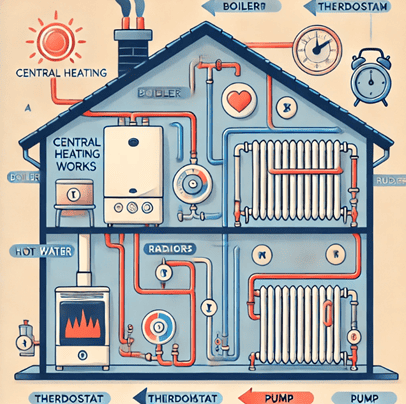

When it comes to heating your home, choosing the right system can significantly impact your comfort, energy efficiency, and utility costs. At Nashoba Air & BoilerWorks, we understand that every home has unique heating needs. Two popular options for residential heating are baseboard heat and central heating systems. Each comes with its own benefits and drawbacks, and understanding these differences can help you make an informed decision.
Baseboard Heating: Pros & Cons
Baseboard heating operates by using electric or hot water (hydronic) units installed along the base of walls. These systems provide localized heating, making them ideal for zone control.
Pros:
- Energy Efficiency: Hydronic baseboard heaters can be more efficient because they retain heat for longer periods.
- Zone Control: Individual room thermostats allow you to heat only the spaces you’re using, reducing energy waste.
- Quiet Operation: Unlike forced air systems, baseboard heaters operate silently, making them ideal for bedrooms and study areas.
- Easy Installation: Electric baseboard heaters are relatively easy to install compared to ducted systems.
Cons:
- Slower Heating: Baseboard systems take longer to heat a room compared to central heating.
- Limited Air Circulation: Since they do not use fans, heat distribution can be uneven, leading to colder spots.
- Higher Electricity Costs: Electric baseboard heaters can be expensive to operate in regions with high electricity rates.
- Potential Space Constraints: Baseboard units take up wall space, limiting furniture placement.
Central Heating: Pros & Cons
Central heating systems, including furnaces, boilers, and heat pumps, distribute heat throughout a home via ducts or radiators.
Pros:
- Fast & Even Heating: Central systems provide quick and uniform warmth across your entire home.
- Improved Air Circulation: Forced air systems help distribute heat evenly and can also include air filtration.
- Compatible with Cooling: If you have central air conditioning, a central heating system integrates seamlessly.
- Lower Operating Costs: Depending on the fuel source (natural gas, propane, or geothermal), central heating can be more cost-effective than electric baseboards.
Cons:
- Higher Installation Costs: Installing ductwork or a new furnace/boiler system can be expensive.
- Maintenance Requirements: Central heating systems require regular maintenance, such as filter changes and duct cleaning.
- Noise Levels: Forced air systems can produce noise from fans and ductwork.
- Energy Loss: Heat can be lost through duct leaks, reducing efficiency.
Which System is Right for You?
Choosing between baseboard and central heating depends on various factors, including your home’s layout, insulation, budget, and energy preferences. If you’re looking for an affordable and easy-to-install option for zone heating, baseboard systems may be the way to go. However, if you prefer whole-home heating with better air circulation and efficiency, a central heating system is likely the better choice.
At Nashoba Air & BoilerWorks, we specialize in helping homeowners select and install the most efficient heating system for their needs. Whether you’re considering an upgrade or need professional maintenance, our team is here to help. Contact us today for expert guidance on keeping your home warm and comfortable all winter long!